

If you’re attempting to wire your ceiling fan yourself, you’re going to need to understand the basics of what to connect. There are three different types of wires you’ll need to be aware of. The first one is a black wire, the second is a white wire, and the third is usually bare copper wire.
These three work together to power the fan and lights using the energy sources in your home. If you mess it up, it could not only cause a spark but also be dangerous.
That’s why it’s best to be prepared ahead of time. In this article, we will show you the basics of how to wire a ceiling fan with 3 wires.
Wiring a Ceiling Fan with Three Wires
Ceiling fan wires often have different colors that correspond to your home’s circuitry wires, which can make it confusing to hook them up. However, it also depends on what type of ceiling fan you get. If you only are installing a ceiling fan with three wires, then it’s likely not going to include wiring for the lighting.
One of the first steps you should take is to read your instruction manual. If you’ve bought your ceiling fan through a retail store or online, the package should come with instructions on how to install. Since each make and model is different, connecting the wires will be a bit different for each ceiling fan.
In this section, we’ll work to explain some of the necessary details you’ll need to learn how to wire a ceiling fan with 3 wires.
Materials Needed
- Ladder or stool
- No contact voltage sensor
- Electric screwdriver
- Orange wire connectors
- Yellow wire connectors
The Steps
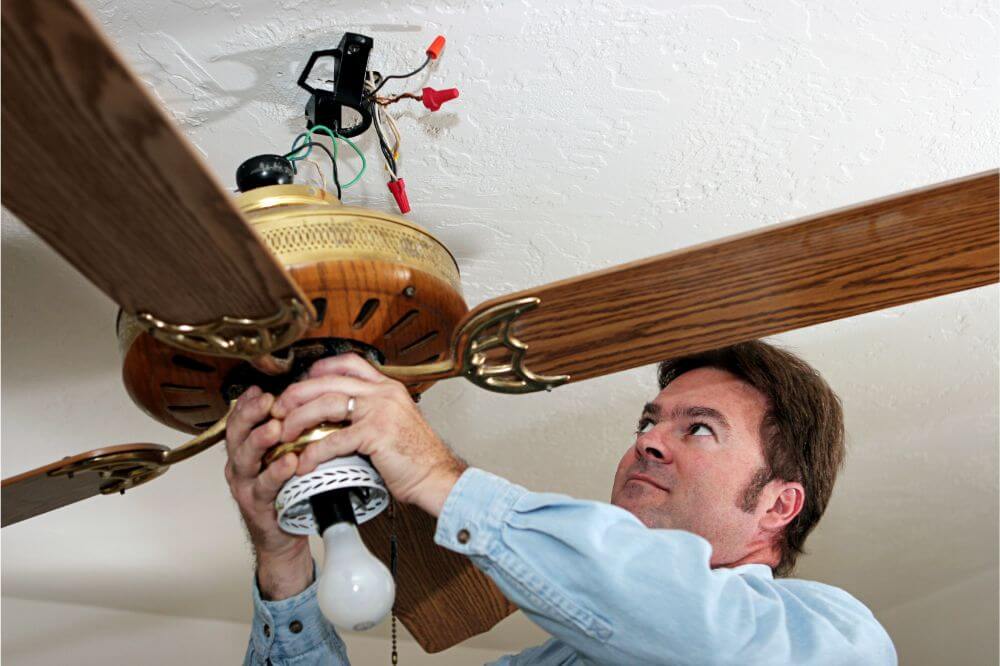
1. Cutting Off the Power
The first step you would need to take is to cut all power off from the ceiling fan. If it’s already been installed or is connected in any way while you’re working with the wire, you might cause an accident. The cables tend to spark if you combine them wrongly and on top of that, each one will electrocute you if you don’t shut off all power first.
From here, take a ladder and stool and then place it on the floor so that you can reach the electrical box on your ceiling. Take one of the non-contact voltage sensors from the box and scan it. If there’s an electrical current, the box will make a beeping sound to show you that there’s electricity present.
2. Mounting the Bracket and Ceiling Fan
Next, take the mounting bracket and install it according to the directions on your instruction manual. You’ll then want to hang the ceiling fan by using the bracket. It’s easier to do this with two people, so be sure to have an extra set of hands.
After this, connect the small hook that’s located next to the fan’s motor. This should connect directly onto the bracket and can help keep the weight of the fan supported and balanced. There should also be a down rod which inserts into the fan that can help hold it in place while you’re installing it.
3. Inspect the Wires
Inspect all wires in your electrical box and get them ready to be connected. The first one you’re going to link is the black wire, which should attach to the hot wire. On the other hand, the white wire is a neutral one and should be used to complete the electrical circuit, while the copper wire should be connected to the ground wire.
Now, inspect the ceiling fan wires. There should be a black wire for hot wiring, a white wire for neutral, and a blue wire for hot-wiring a light. There won’t be any ground wire for the ceiling fan, which can be a bit confusing, but don’t let that discourage you; they all connect.
4. Connect the Wires
Take the green ground screw which should be located on your ceiling fan’s bracket and attach it to the bare copper wire located in the electric box. You’ll need to twist these together and make sure that they’re appropriately connected using an orange wire connector.
After this, take the white wire from the ceiling fan and connect it to the white colored wire coming from the electrical box. Use the wire connector to ensure that each of the wires is correctly attached.
Lastly, take the black wire from the ceiling fan and match it with the black wire inside the electrical box. You’ll need to connect those as well since these will be the final ones. Once you’re all done with those, take your yellow wire connector and connect all three wires.
Conclusion
Connecting wires in your home can seem complicated, but it’s a simple task if you know what you’re doing. It’s important to remember that if you’re not familiar with the process and need a professional, an engineer or electrician can help.
Don’t hesitate to get help if you need it, as you wouldn’t want to mess up the wiring in your home and cause more electrical issues. Hopefully, this guide has helped you learn how to set up your fan’s wires.